The Modern Attorney’s Guide to Marketing Settlement Results (Without Violating Ethics Rules)
A guide for attorneys on how to market and produce their settlement post content on social media and their own website.
Why Settlement Marketing Works in 2026
Clients don’t compare resumes of attorneys they compare results. For decades, attorneys have leaned heavily on their credentials: law school attended, years in practice, bar admissions, and associations. While those still matter, they are no longer the deciding factor for most consumers. Today’s client wants proof. They want to see what you’ve actually accomplished. In a world where information is instantly accessible, outcomes carry more weight than titles.
Social proof beats credentials. Reviews, testimonials, settlement results, and real case examples influence decisions far more than framed diplomas on an office wall. Consumers naturally trust what they can verify and what others have experienced. A $750,000 settlement post, a video explaining a recent win, or a satisfied client sharing their story creates a stronger emotional and psychological impact than listing memberships or awards.
We’re also seeing the rise of visual proof across platforms like Instagram, TikTok, and YouTube Shorts. Short-form video has changed the way professionals communicate credibility. Instead of reading about an attorney’s success, potential clients can see it. They can watch a lawyer explain a case outcome, hold up a settlement check, or break down a legal strategy in under 60 seconds. Visual content builds familiarity and authority faster than traditional bios ever could.
Transparency builds trust before the consultation. When attorneys openly share their results, processes, and expertise online, they reduce uncertainty. By the time a potential client picks up the phone or schedules a meeting, much of the trust has already been established. In today’s legal marketplace, visibility and transparency are not optional they are competitive advantages.
Ethics & Compliance
Attorneys must carefully follow state bar advertising rules when promoting their services, especially online. Most jurisdictions require specific disclaimers, including clear language such as “Past results do not guarantee future outcomes,” to prevent consumers from forming unrealistic expectations. Marketing content must avoid misleading language, exaggerated claims, or statements that could be interpreted as guarantees. Additionally, when mentioning clients, settlements, or case details, attorneys must obtain proper consent and protect confidentiality. Staying compliant not only avoids disciplinary issues but also reinforces professionalism and trust.
How to Format a Settlement Post
Template 1: Big Check Post
1. Case Type
- Type of case (Car Accident, Truck Accident, Slip & Fall, Employment, Lemon Law, etc.)
- Brief description (rear end collision, workplace injury, defective vehicle, etc.)
2. Injury
- General description of injuries (e.g., neck and back injuries, surgery required, lost wages)
- Keep it factual and non-exaggerated
- Do Not reveal confidential details
3. Challenge
- Liability dispute?
- Insurance company denied claim?
- Low initial offer?
- Complex medical or legal issues?
- Briefly explain what made the case difficult
4. Result
- Final settlement amount
- Key win (policy limits secured, multiple defendants resolved, trial avoided, etc.)
- Focus on outcome, not hype
5. Disclaimer
- “Past results do not guarantee future outcomes.”
- Case results depend on the unique facts of each case.
- Client consent obtained (if applicable).
Template 2: Story Format
1. “Client came to us after…”
- Describe the situation they were in
- What problem were they facing?
- Why were they frustrated or concerned?
2. “Insurance offered…”
- Initial offer or denial
- Highlight the gap between offer and fair value
- Keep the language factual, not inflammatory
3. “We fought…”
- What actions were taken? (negotiations, expert reports, litigation, depositions, trial prep)
- Emphasize advocacy and strategy
4. “Final settlement…”
- State the result clearly
- Explain how it improved the client’s situation
- Close with required disclaimer:
- “Past results do not guarantee future outcomes.”
- Every case is different.
Turning One Settlement Into 10 Pieces of Content
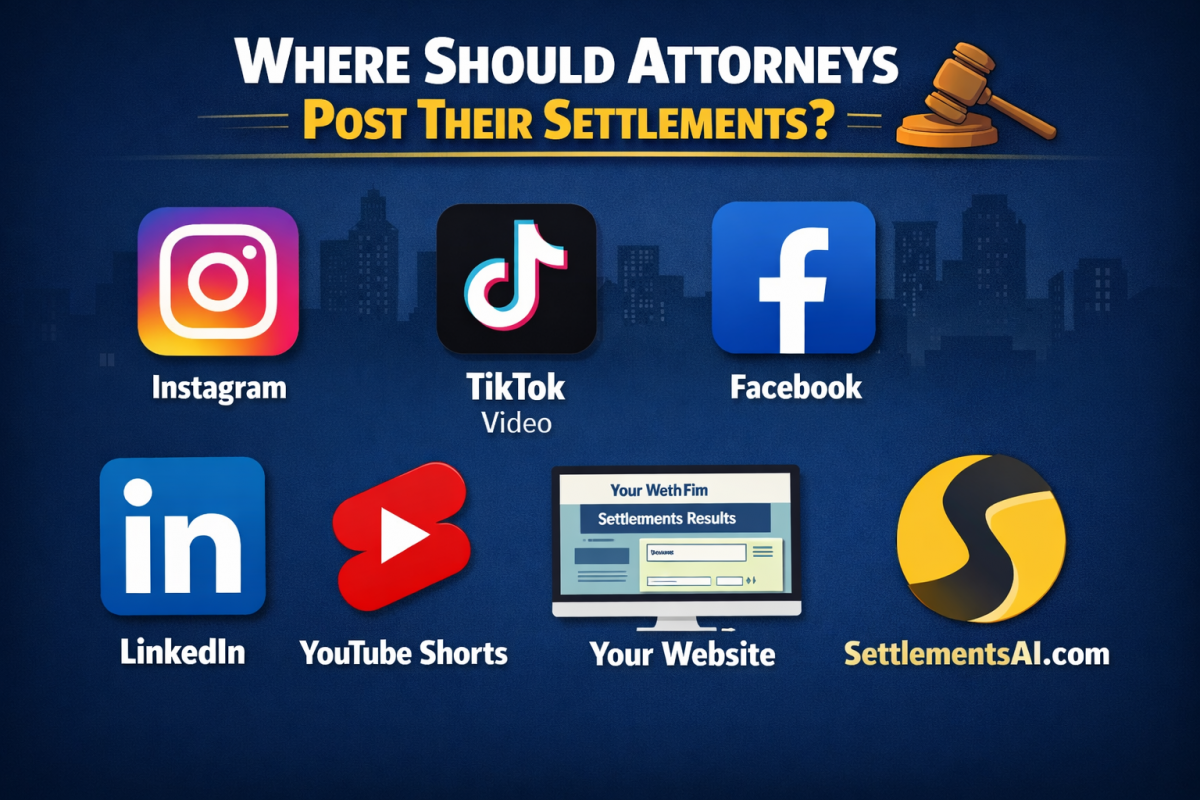
Turn one of your settlements into multiple pieces of content to attract as many eye balls as possible. Here is the list of where to post:
• Instagram post
• Reels
• TikTok
• Blog post
• Email newsletter
• LinkedIn article
• Your Website SEO page
• SettlementsAI listing
• X.com (formerly Twitter) – if applicable.
SEO Strategy for Settlement Marketing
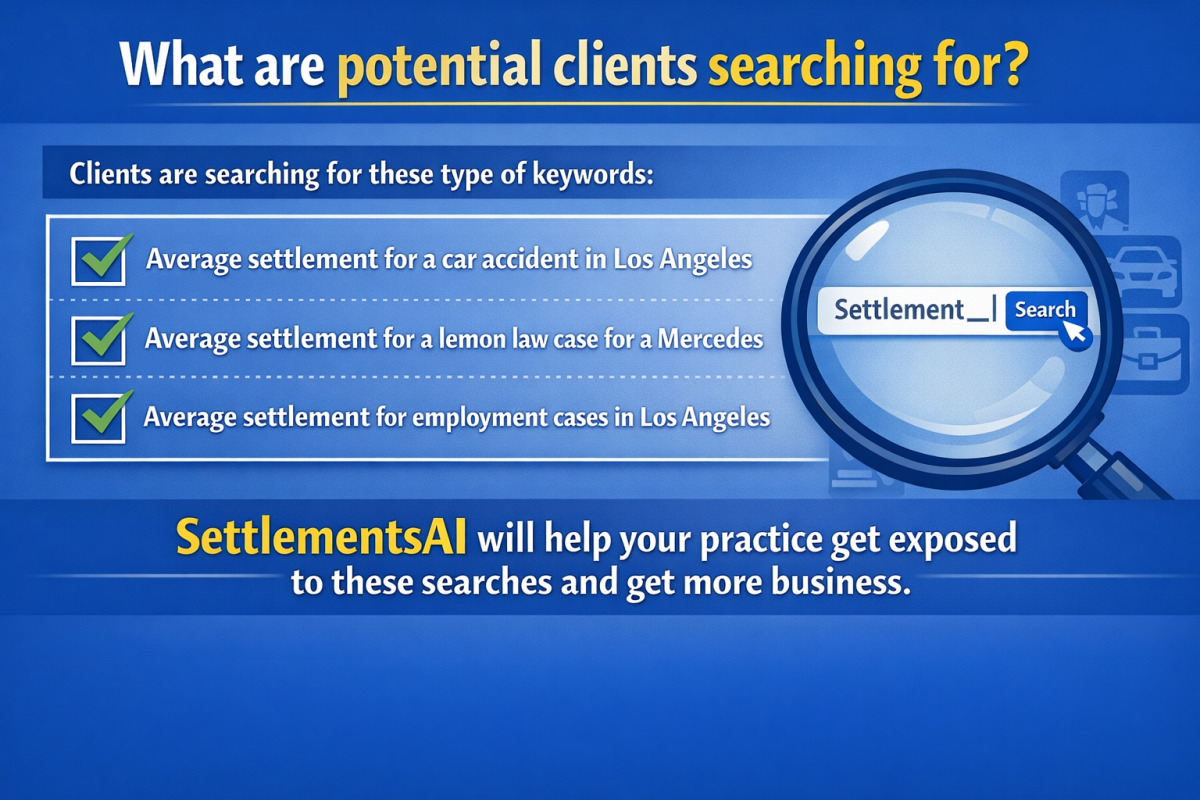
An effective SEO strategy for settlement marketing focuses on high-intent, specific search phrases like “Car accident settlement Los Angeles” or “Slip and fall settlement example.” These are long-tail keywords with detailed searches used by people who are actively researching real outcomes, not just browsing for a lawyer. Search engines and AI search platforms favor highly specific result pages because they directly answer what the user is searching for, especially when they include clear case details, location relevance, and structured information. By building optimized pages around actual settlement results instead of generic service descriptions, attorneys position themselves above traditional marketing agencies that rely on broad, competitive keywords and vague content. Specific proof driven pages attract more qualified traffic and convert better.
Common Mistakes Attorneys Make
Many attorneys rush to post settlement results without thinking strategically and it shows. Posting without context leaves potential clients confused about what actually happened or why the result matters. Failing to include required disclaimers can create compliance risks and damage credibility. Overhyping language can feel gimmicky and erode trust instead of building it. Inconsistent branding across posts weakens recognition, and perhaps most importantly, not tracking which posts generate calls means missed opportunities to refine what truly works. Avoiding these common mistakes instantly separates serious firms from amateur marketing efforts and builds authority fast.
Why Transparency Wins Long Term
Transparency wins long term because it builds trust before a client ever makes contact. In today’s digital world, people expect openness and they want to see proof, consistency, and authenticity. Law firms that regularly showcase real case results, explain outcomes clearly, and communicate honestly position themselves as confident and credible. Over time, this compounds into stronger brand authority, better client alignment, and higher quality leads. The firms that showcase real results consistently will dominate the next decade of legal marketing.
Feature your settlements on SettlementsAI.com
Where transparency meets visibility.